Start with the task and approach
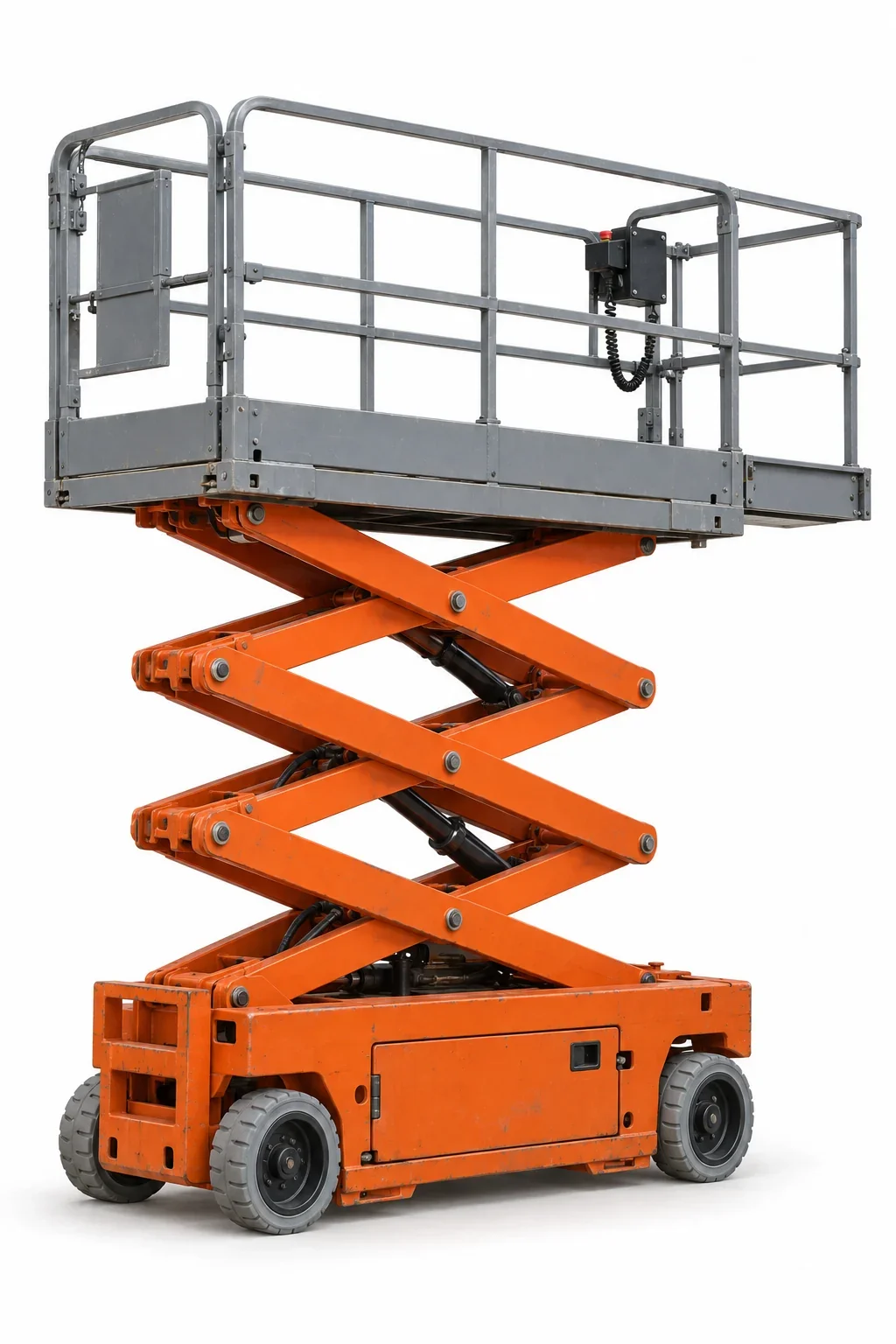
- Can the lift set up directly beneath the work face? If yes, a rough-terrain scissor provides vertical access with a larger, stable platform.
- What is the approach surface—gravel, cold patch, or mixed pavement? Outdoor scissor lifts with higher ground clearance handle transitions that stall slab machines.
- How much platform height is truly required? Outdoor models get heavy as height rises; confirm the minimum height that meets the work.
Why Cleveland’s conditions matter
- Lake-effect precipitation and freeze-thaw cycles create slick, rutted approaches. Exterior-duty scissor lifts are designed for these variables, but the unit’s instructions and site procedures always govern.
- Older industrial sites and lakefront areas can have uneven grades and soft shoulders. Ground assessment helps determine whether outriggers or alternative equipment is appropriate.
Constraints that narrow the selection
- Platform size vs. weight: Larger decks support more tools and materials but increase ground pressure on soft subgrade.
- Transport and staging: Check gate widths, curb cuts, and laydown areas common to regional industrial properties.
- Power source: Outdoor-duty units may use different power systems than indoor electrics; plan fueling or charging around site access and weather exposure.
When a rough-terrain scissor isn’t the fit
- If the task requires up-and-over placement to reach behind façades or structural elements, see /boom-lift-rental/.
- If most work shifts indoors onto finished slabs, coordinate with /electric-scissor-lift-rental/ for a separate unit.
Related equipment
- Boom lifts for reach: /boom-lift-rental/ and /aerial-lift-rental/
- Material movement outdoors: /telehandler-rental/
Discuss project staging and seasonality with Cleveland Scissor Lift Rentals at (216) 672-6364.