What changes the decision in Cleveland
Work planning in Cleveland, OH rarely follows a single pattern. Lake-effect winters push many exterior tasks to windows of clear weather or demand machines with traction, ground clearance, and weather-resistant components. Indoors, dense racking, mechanical rooms, and finished corridors push toward compact electric platforms with tight turning and low floor loads. Aging exteriors along the lakefront or on industrial sites may require rough-terrain scissor lifts rather than slab-only units.
Start with job geometry, then layer in local constraints
Two questions narrow the field quickly: - Can the machine sit directly below the task, or does it need outreach over obstacles? - Is the surface a smooth slab or a variable outdoor grade?
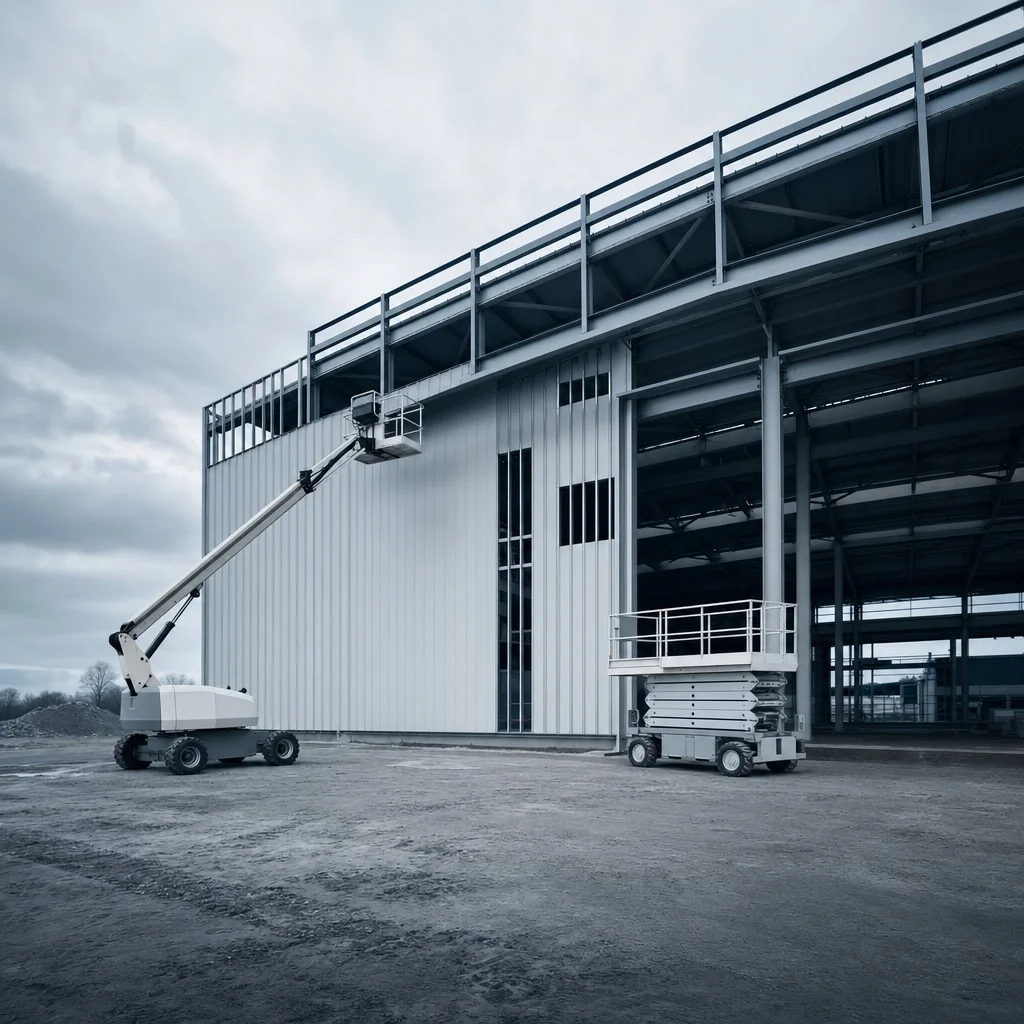
If work sits straight overhead on a slab, an electric scissor lift usually sets the baseline. If the surface is uneven or work occurs on wind-exposed exteriors, compare rough-terrain scissor lifts and boom lifts. When the task hides behind pipes, conveyors, or equipment, an articulating boom helps navigate up-and-over paths. Long, unobstructed reaches on open pads often favor a telescopic boom.
Industry patterns seen around the city
- Warehousing and logistics: frequent narrow-aisle lifts with platform heights matched to racking tiers and low-emission requirements.
- Healthcare and institutions: quiet electric units with non-marking tires for corridors and atriums, plus careful floor loading.
- Advanced manufacturing: mixed fleets—electric scissor lifts for line changeovers and booms for equipment access at height.
Winter and humidity considerations
Cold, humid winters affect electric fleet planning. Battery performance and storage space planning matter for overnight staging. Outdoor tasks may need machines specified for low-temperature fluids and sealed electrical systems. When wind and drift reduce workable windows, reach margins and ground conditions should be confirmed against the selected unit’s guidance and site procedures.
How to use this site
Each product section compares equipment by platform height, outreach, footprint, floor load, grade tolerance, and typical Cleveland use cases. For adjacent needs, see aerial lift overviews, forklifts, telehandlers, and site support like generators and light towers, temporary fencing, and storage containers. For questions about a specific job layout, visit Contact.